 When buyers evaluate a home, they often focus on the property itself. They look at square footage, bedrooms, bathrooms, finishes, yard size, and price. Those details matter, but the neighborhood can have just as much influence on long term happiness. A house can be renovated. A location is much harder to change.
Visit Like a Local
The neighborhood test is simple: spend time in the area as if you already live there. Many buyers only see a neighborhood during a scheduled showing, often during a convenient time of day. That snapshot may not reveal the full picture. A street that feels quiet at noon may feel busy during rush hour. A parking situation that looks easy on a weekday morning may be frustrating at night. A nearby school, restaurant, train track, or main road may create different activity depending on the hour.
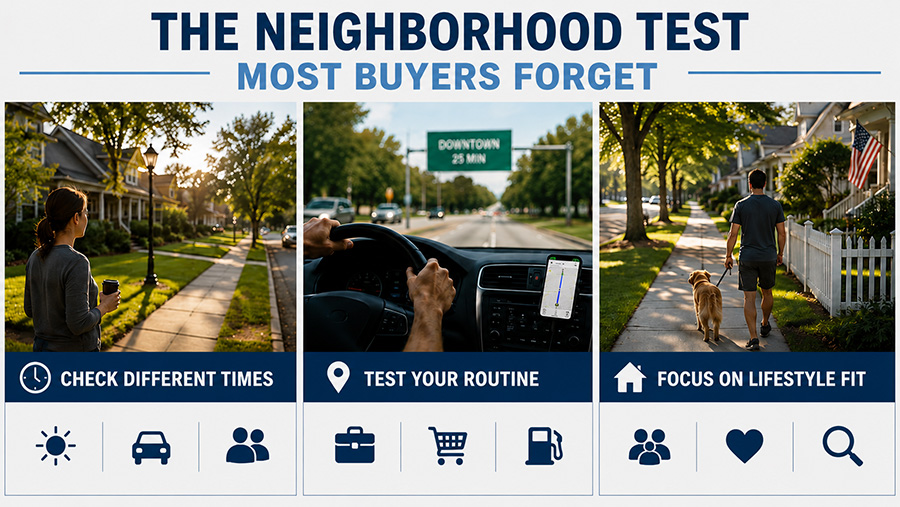
Check Different Times
Before making an offer, visit the neighborhood at multiple times if possible. Drive through in the morning, late afternoon, evening, and weekend. Notice traffic patterns, lighting, noise, parking, sidewalks, and how people use the area. Are neighbors walking dogs? Are kids playing outside? Are homes maintained? Does the area feel comfortable after dark? These observations can help you understand the daily rhythm of the location.
Test Your Routine
It is also smart to test your routine. Drive from the home to work during your normal commute time. Visit the grocery store you would actually use. Check the distance to schools, daycare, parks, gyms, coffee shops, medical offices, or relatives you visit often. A home may seem perfect until you realize that every routine errand takes longer than expected.
Focus on Lifestyle Fit
Buyers should also look for lifestyle fit, not just resale value. Some people want quiet streets and privacy. Others want walkability, restaurants, and energy. Some buyers care most about school access. Others want a shorter commute or proximity to outdoor activities. There is no universal perfect neighborhood. There is only the neighborhood that fits your life.
Use Research and Real Observation
Online research can help, but it should not replace firsthand observation. Maps, reviews, crime statistics, school ratings, and community groups may provide useful context, but they are not the same as experiencing the area yourself. The feeling of turning onto the street, parking your car, and walking around matters.
Prevent Location Regret
The neighborhood test can prevent regret. A beautiful home in the wrong location may become frustrating quickly. A slightly less perfect home in a location that supports your routine may feel better year after year.
When buying real estate, you are not just choosing walls and a roof. You are choosing mornings, evenings, errands, sounds, neighbors, routes, and routines. Test the neighborhood before you commit to the house.