 Each year around April, we can find ourselves becoming a little more tense at the thought of what is about to occur: tax time.
Instead of falling into the trap of procrastinating your taxes, however, it’s much more beneficial to face tax time head-on and do your research on your applicable deductions well in advance.
Your home is good for many things, but using your home to reduce your tax burden may be one benefit you haven’t thought of.
Here are some tax benefits that can be leveraged with your home, and some ways to lower your tax bill in 2014.
Deduct Interest On Home Loans
Though interest paid on personal loans isn’t deductible on your tax return, interest paid on mortgages is.
Home mortgage interest, for both your primary residence and a second home such as an investment property, can account for a large bill near the end of the year, and can significantly decrease your tax bill for 2014.
Interest paid on a line of credit for your home or a home equity loan is also usually deductible, and you may also qualify to deduct the insurance premiums on your private mortgage if this was a requirement from your lender. Ensure you keep your Form 1098 from you lender, and be sure not to miss each of your interest deductions.
Deducting Points Paid For A Better Rate
If you paid points in order to get a better interest rate on your home mortgage, the IRS will allow you to deduct these, too. If you meet the requirements for this deduction, one of which is that you paid the points in the same year that you purchased your primary residence, be sure to add the points to your list of deductions.
Deduct Property Taxes
Property taxes are also deductible on your tax return, and since they make up a significant portion of your home expenses each year, they certainly shouldn’t be excluded from your list of deductions in 2014.
As an annual deduction for the entire period you own your home, ensure you don’t forget about your first year in your home. If you’ve just purchased your home, the property taxes would have been split between the seller, the previous homeowner, and you, the buyer, at the time of the property transfer. Your portion of your first year’s property taxes for the home is also fully deductible.
Tax-Free Sales Gain
If you’ve owned and lived in your home for a minimum of two years and are ready to sell, you likely qualify for up to $250,000 dollars of tax-free profit, or up to $500,000 for married couples.
If the sale falls short of the two year mark, the IRS provides some tax relief if the sale is due to a list of unforeseen circumstances, such as changes in employment or health. Be sure to see where you qualify, and leverage the sale of your home for tax-free sales gain.
Having the ability to leverage your home in order to lower your tax burden is, of course, another benefit of being a homeowner. Often, reaping the full benefits of tax deductions is a simple matter of doing your research or speaking with a professional to get the information applicable to you.
 April’s meeting of the Fed’s Federal Open Market Committee was held along with the Board of Governors of the Federal Reserve System.
 Last week’s economic news was dominated by speeches given by Federal Reserve presidents, the minutes from April’s FOMC meeting and commencement address given by Fed Chair Janet Yellen. The latest readings for new and existing home sales were also released.
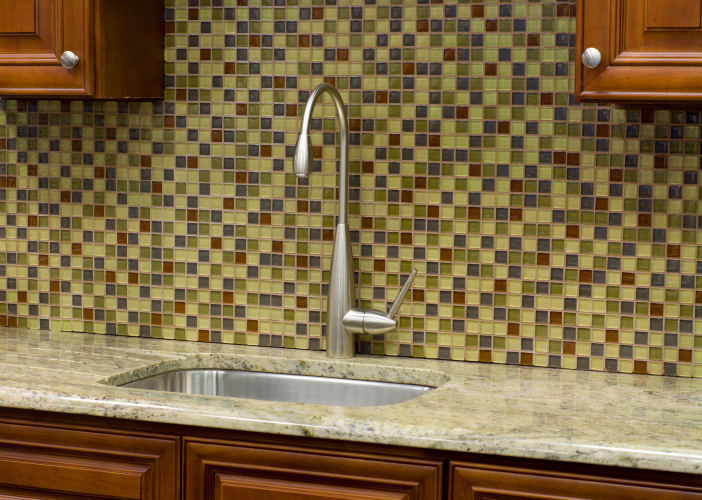 Homeowners who want to increase the appeal of their residence before putting it up for sale can, within a few hours and with a little elbow grease, perform some do-it-yourself (DIY) kitchen upgrades that are sure to pique the interest of would-be buyers.
 Believe it or not, paint colors can affect your mood. When remodeling your home, the color you use on the walls can end up being just as critical to the thematic consistency of your home as the furniture you use to decorate it.
 Environmental allergens affect the way many people live their lives and clean their homes. Allergens make their way into our houses, and can settle in some unexpected places – but knowing where these irritants can hide can help you eliminate problematic allergens from your home.
 Signs of mold in your attic can be indicative of a bigger problem in your house, which is why it is a good idea to nip this situation in the bud as soon as you see it developing.
 Last week’s economic news was relatively flat, but highlights include the NAHB Housing Market Index for May, which posted its lowest reading since May 2013. Although analysts expected a May reading of 48, the May 2014 index reading was 45 as compared to April’s reading of 46.
 The decision to install a pool is generally one that is applauded by at least certain members of the family. Whether you have children or not, however, having a pool at home is certainly something you can enjoy for yourself.
 There are a number of ways that you can improve the look and style of a room without having to spend an arm and a leg. Of course, painting and stenciling are the most affordable ways to bring new life and unique detail to an old room.