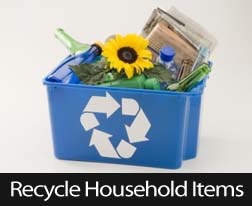
 Every week the trash truck comes to pick up our garbage and unwanted items, which are promptly taken to landfills. Instead of filling landfills and just buying new items to stuff our homes, we can help the earth and recycle everyday household items.
Below are a few fun and creative ideas for recycling things around your home that you might be ready to trash.
Coffee Table Into Bench
If you just purchased a new coffee table, don’t give away the old one — repurpose it. Find a space in your home where you could use some additional seating, like at the end of your bed or in the entryway.
Push it up against the wall so that any drawers and shelves are facing out. Then add some cushions and pillow. Tada; a bench!
Copper Piping Into Bathroom Hardware
Whether you’re going for a modern industrial look or a French country theme, old copper piping can add an attractive and interesting conversation piece to your restroom.
Utilize a U-shaped piece of piping as a toilet paper holder and long pieces of pipe as towel racks. Polish the copper and then seal it with spray lacquer so that it keeps its sheen.
Light Bulbs Into Decorations
Recycle filament light bulbs with a fun little craft project for your children. Grab paint, twine, glitter and glue. You can make flower pots and hang them in the yard as a simple green accent. Use the twine to create loops for hanging.
Pillowcase Into Shopping Bag
Take an old or vintage pillowcase, lay it flat and cut the top corners off of the open end. You’ll want to cut the corners off in a half-C shape so that that there is only about a two-inch strip left in the middle at the top.
Sew that two-inch strip together and you’ve got your handle. This reusable shopping bag rolls up tight and is easy to wash.
Drawer Into Dog Bed
The size of your animal will dictate the size of drawer you should repurpose. A cat might like a kitchen drawer while a bigger dog would use a large dresser drawer. Strip the wood off the drawer and repaint. Remove the hardware.
Maybe stencil your pet’s name on the front of the drawer. Then create a mattress using foam, batting and a soft and durable material.
Before getting rid of that broken side table or trashing those carry-out chopsticks, take a second look and tap into your creative side to see if you might be able to recycle and give them a second life.
 You probably had someone check your foundation when you bought the house, but have you looked twice at it since? These problems don’t happen overnight.
 In some ways, selling vacant land is no different from selling a home. You still have to prepare it for sale, and you still need to make it look as good as possible. This process of cleaning and beautifying is called staging. Here are a few tips for staging your land.
 Last week’s economic news came from a variety of sources. Most significant was the Fed’s Federal Open Market Committee statement after its meeting ended Wednesday. The statement indicated that the Fed saw moderate economic growth. FOMC did not taper its purchase of MBS and Treasury securities.
 Candles and candle accessories are very popular. However, when not used properly, candles can be extremely dangerous, resulting in property destruction and even injury or death. Here are some candle safety tips to help keep you and your home safe.
 Gone are the days where parents sit at home while their costumed children run around the neighborhood alone. These days, most small children are walked door to door by family. While there is relatively little mischief they can get into under their parents’ watchful gaze, below are even more trick-or-treating safety tips for an untroubled, fun and haunted evening.
 With the economic downturn, anyone dealing in real estate quickly became familiar with previously little-known terms such as foreclosure and short sale. Now that the housing market is picking back up and people are moving on, a new term is coming to light — zombie titles.
 Pending home sales fell in September by -5.60 percent, and were 1.20 percent lower year-over-year. This is the first time in more than two years that pending home sales have fallen below year-earlier readings. September’s reading was below August’s reading of -1.60 percent.
 Federal government agencies issued reports that were delayed by the government shutdown; and Freddie Mac reported that average mortgage rates fell for all types of loans it reports. The National Association of REALTORS issued its Existing Home Sales report on Monday. While 5.30 million home sales were expected an annual basis, September’s reading fell short at 5.29 million sales.
 Barbecue season is all but over, and you won’t be spending as much time out on the deck. Don’t let it get you down, though. Spring will be here before you know it. There are a lot of things that can wear down and damage your deck, so protect your deck and make sure it stays in tip top shape over the winter.